
Episode 187: Dr. Raja Mukherjee Why FASD Is a Connectivity Disorder, Not a Behavior Problem
Feb 05, 2026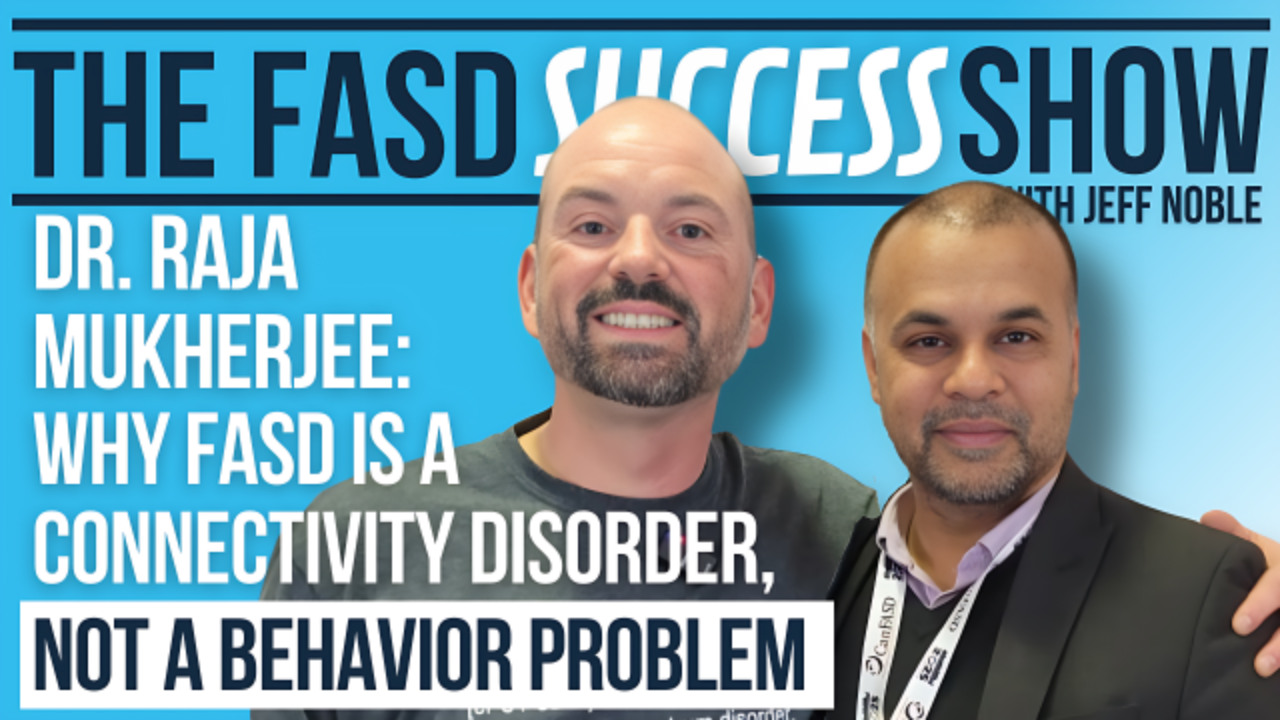
FASD Is Not Broken Behavior — It’s Broken Communication Between Brain Networks
Why do some days feel manageable… and others fall apart without warning?
Why can a child, teen, or adult with FASD sound articulate, capable, and motivated one moment — then completely shut down when stress hits?
In this episode of The FASD Success Show, Jeff Noble sits down with internationally recognized psychiatrist Dr. Raja Mukherjee to answer a question caregivers have been asking for years:
What is actually happening in the brain with FASD?
Dr. Mukherjee brings more than two decades of clinical, research, and systems-level experience to this conversation and delivers a powerful reframe that changes everything:
FASD is not about a lack of intelligence or motivation.
It is a brain connectivity condition.
Meet Dr. Raja Mukherjee
Dr. Raja Mukherjee is a consultant psychiatrist and one of the world’s leading experts in fetal alcohol spectrum disorder.
He is the founder and lead clinician of the UK’s National FASD Clinic, the first and only specialist clinic in the National Health Service dedicated to diagnosing and supporting individuals with FASD across the lifespan.
Dr. Mukherjee is also an honorary professor, a clinical leader in adult neurodevelopmental services, and an advisor to organizations including the World Health Organization and the UK Department of Health. In 2023, he was awarded an MBE for his services to people with FASD.
What sets Dr. Mukherjee apart is his ability to translate complex neuroscience into language families can actually use.
The Big Shift: From “Behavior” to Brain Networks
One of the most important takeaways from this episode is understanding how the brain works as a system.
The brain does not operate as isolated skills like memory, attention, or impulse control. It works through networks that communicate with one another.
Dr. Mukherjee explains that prenatal alcohol exposure disrupts these connections — especially the networks responsible for shifting between rest, focus, and action.
This helps explain why individuals with FASD can appear capable in calm, structured environments but struggle when real life adds stress, emotion, or unpredictability.
It is not willful behavior.
It is a nervous system that cannot reliably switch gears.
Why Stress Changes Everything
Dr. Mukherjee connects this directly to what caregivers see every day.
When stress hormones like cortisol rise, the brain shifts away from planning, reasoning, and flexibility and into survival mode. For individuals with FASD, that shift happens faster and hits harder.
This explains the inconsistency that families are so often blamed for.
Good days are not proof that someone “can do it if they try.”
Hard days are not evidence of failure.
They are reflections of how the brain is coping with load, stress, and sensory input in that moment.
Why Testing Doesn’t Always Match Real Life
Another critical insight from this conversation is the gap between clinical testing and everyday functioning.
Most assessments happen in quiet, structured environments. Life does not.
Dr. Mukherjee explains that skills that look solid in an assessment room can fall apart in the real world where emotions, time pressure, sensory overload, and social complexity exist.
This disconnect is not caregiver exaggeration.
It is a known limitation of current systems — and science is finally catching up.
What the Science Is Starting to Confirm
This episode builds on what listeners have heard recently from researchers like Dr. Valerie Temple and Dr. Jacqueline Pei.
The emerging consensus is clear:
Brain development in FASD continues into adulthood
Skills can strengthen over time
Progress is slower and more vulnerable to stress
Environment and regulation matter more than age
Development is not absent.
It is different.
Why This Matters for Families
For caregivers, this conversation offers something rare and deeply validating.
If your loved one struggles more under pressure, that is not poor parenting.
If progress feels slow, that does not mean it is not happening.
If systems expect milestones based on age alone, the problem is the system.
Dr. Mukherjee reminds us that success should be measured by safety, regulation, and quality of life — not comparison or timelines that were never designed for FASD brains.
The Long Game
Despite slow funding and systemic barriers, Dr. Mukherjee shares hopeful news.
There are more researchers, more PhD students, more international collaborations, and better data than ever before. FASD is no longer being studied by a handful of voices shouting into the void.
Momentum is building.
And caregivers have been right all along.
Why This Episode Matters
This episode is not about quick fixes or false optimism.
It is about evidence-based hope the kind rooted in neuroscience, lived experience, and long-term thinking.
The science now supports what families have always known:
- Growth continues.
- Support matters.
- Your instincts are valid.
And you are not imagining how hard this is.