
Episode #181 Dr. Debbie Michaud: Healing Old Wounds, and Becoming a Doctor Through Lived FASD Experience
Dec 21, 2025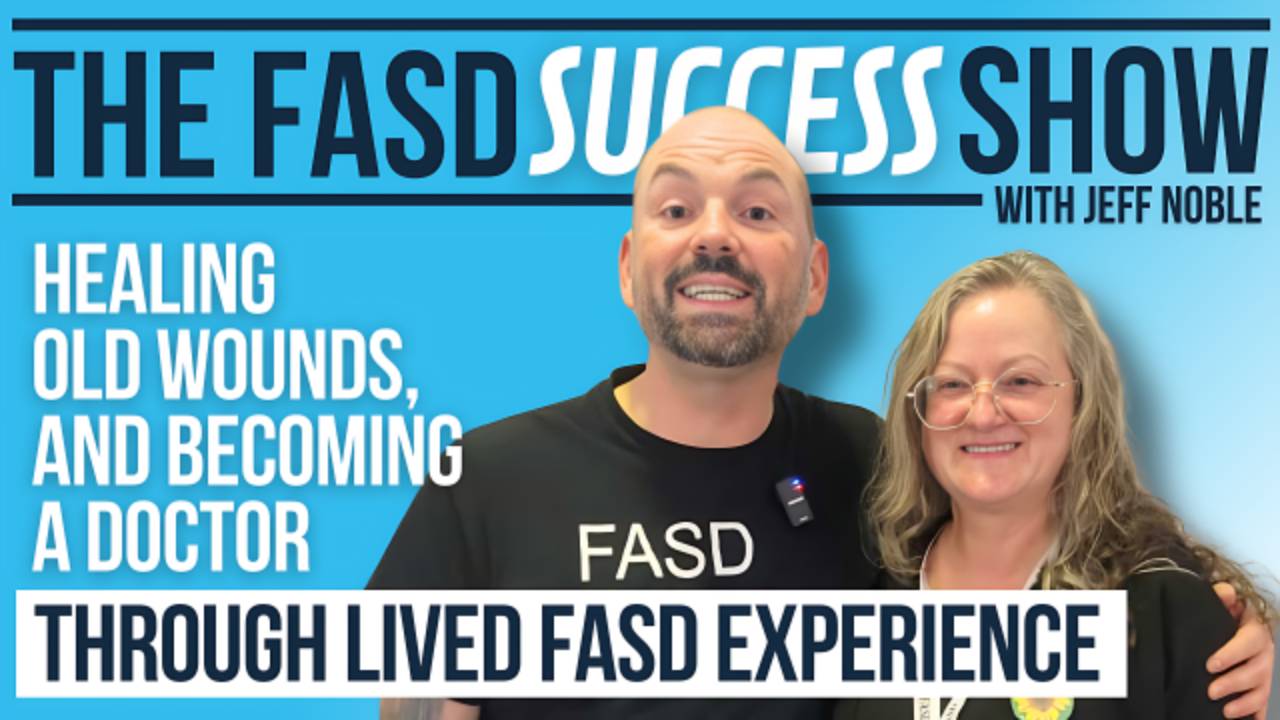
What if healing isn’t about fixing what’s broken but finally seeing it clearly?
In this powerful episode of The FASD Success Show, Jeff Noble sits down with Dr. Debbie Michaud, a researcher, advocate, and storyteller whose ground breaking dissertation Hitchhiking With Mama: Living With FASD, A Collection of Truths explores what happens when we stop trying to fix the past and start understanding it.
Debbie’s story is both deeply personal and universally resonant. She grew up in a family shaped by trauma, addiction, and likely undiagnosed FASD — and her path to healing began when she decided to stop running from her story and start walking through it.
Her dissertation became more than an academic project. It became a journey of reconciliation, understanding, and grace.
Meet Dr. Debbie Michaud
Dr. Debbie Michaud is a researcher, clinical supervisor, and advocate who has spent years exploring how trauma, disability, and stigma intertwine across generations. Her PhD dissertation Hitchhiking With Mama tells the story of her mother’s life through a new lens one shaped by compassion, context, and the science of brain-based understanding.
She is also a caregiver, a mother, and someone with lived experience of the neurodiversity she studies. Her work bridges research and humanity, offering caregivers a roadmap for healing — not by fixing the past, but by reframing it.
In This Episode You’ll Hear
Seeing With “New Eyes”
A turning point in Debbie’s journey came when she learned about intersectionality — the idea that a person can experience discrimination or disadvantage from multiple directions: disability, gender, trauma, class, and access to education. Once she understood that her mother had faced all of those intersecting barriers, anger shifted into empathy. She began to see her mother not as broken, but as surviving with the tools her brain allowed.
The Road Trip That Changed Everything
To gather stories for her dissertation, Debbie invited her mother on a cross-country road trip to retrace their old hitchhiking routes from her childhood. They recorded conversations, shared memories, and rebuilt a connection that had been fractured for years.
One story that stayed with her her mother stranded in Winnipeg, singing in bus stations just to earn enough change to feed toddler Debbie.
What once looked like recklessness became resilience. It wasn’t “Why would you take your baby hitchhiking?” but “You did your best with the executive functioning you had.”
Healing Before It Was Too Late
When COVID hit, Debbie realized her mother was isolated in long-term care. She started visiting regularly, even when the first visits were through glass. They laughed, drank coffee, and gambled online together. The reconciliation came quietly, but powerfully. They healed before her mother passed away — and that peace became the heart of Debbie’s work.
What the Dissertation Revealed
Debbie’s dissertation brought together decades of family pain and systemic misunderstanding — and turned it into knowledge that helps others. She revealed how undiagnosed FASD, compounded by trauma and poverty, shaped her mother’s life and how stigma perpetuated the cycle. Most importantly, she showed that healing is possible even late in life, when understanding replaces judgment.
You Can’t Change Others — Only Your Role
One of Debbie’s most powerful takeaways is one every caregiver can hold onto: you can’t change your parent, your child, or anyone else but you can change your role in the story.
When Debbie stopped trying to fix her mother and focused on being a good daughter, her mother became the mom she had always needed.
For caregivers, this truth is universal. You can’t control others’ growth, but you can control how you show up. And that shift alone can change everything.
Why It Matters
You can’t fix or change the past, but you can move toward healing and toward more good days at home.
Redefining success isn’t about lowering the bar. It’s about aligning your expectations with your reality, closing the gap between what you can manage and what the world expects you to do.
Success for caregivers doesn’t always look like calm, organized perfection. Sometimes it’s surviving the week with your relationships intact. Sometimes it’s repairing faster after the hard moments. Sometimes it’s simply remembering that your patience, advocacy, and creativity are the scaffolding your loved one stands on.
You’re already successful, even if it doesn’t feel that way every day.
Watch or Listen to the Full Episode
Watch on YouTube: https://www.youtube.com/watch?v=tm-MlYvu7BQ
Listen on Apple Podcasts or Spotify: The FASD Success Show
Full Show Notes and Resources: fasdsuccess.com/podcast
Resources and Links
Join our free caregiver community: facebook.com/groups/FASDFOREVER
Subscribe to our YouTube Channel: youtube.com/@FASDSuccess
Follow Jeff on Instagram: instagram.com/FASDSuccess