
Episode 185 Dr. Carly McMorris How to Help When Mental Health Gets Hard
Jan 18, 2026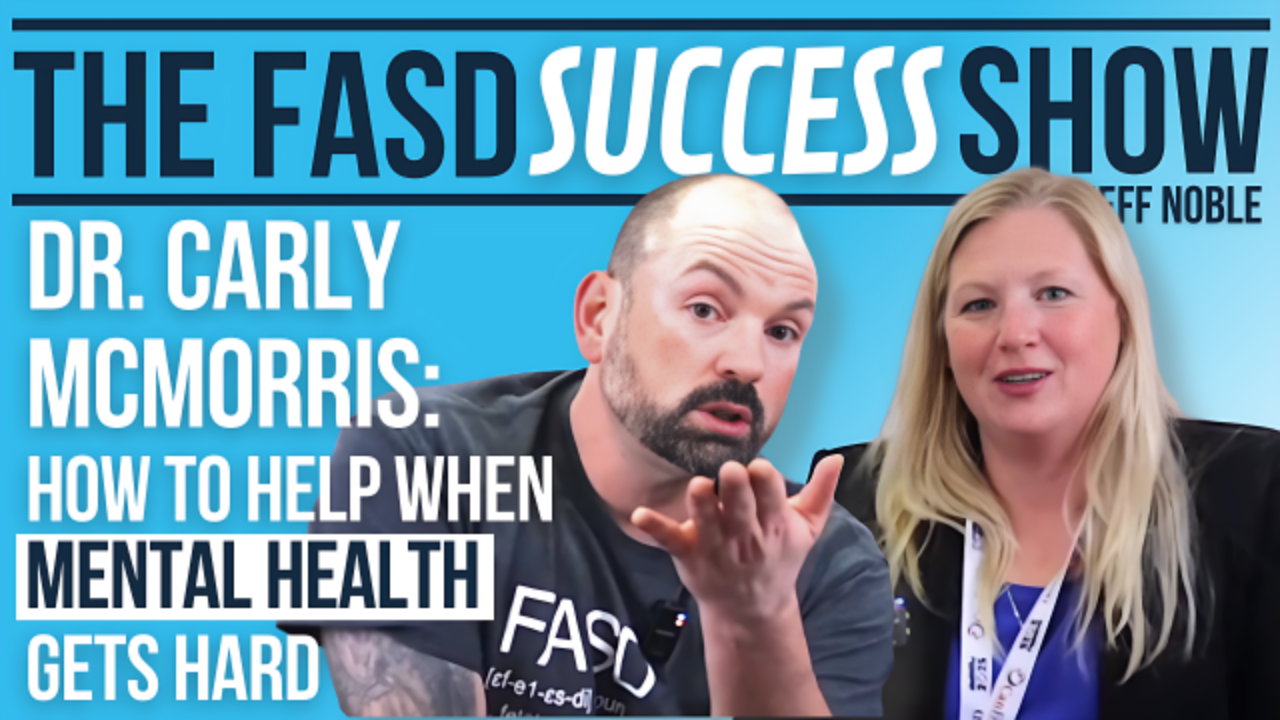
What do you do when mental health gets really hard — when anxiety, depression, and shutdowns start to take over daily life?
This week on The FASD Success Show, Jeff Noble sits down with Dr. Carly McMorris — clinical psychologist, researcher, and associate professor at the University of Calgary — to talk about one of the hardest but most important topics for families: mental health in FASD.
This episode is for anyone who’s ever felt helpless, scared, or worn down trying to support a loved one with FASD through emotional storms and mental health challenges.
Because while it’s tough to face, there are tools, strategies, and real hope — and Dr. McMorris helps break it all down.
Meet Dr. Carly McMorris
Dr. Carly McMorris is one of Canada’s leading FASD researchers. Her work focuses on mental health, suicide prevention, and system navigation for individuals with neurodevelopmental disabilities.
She’s a clinical psychologist, an associate professor at the University of Calgary, and a researcher with CanFASD.
Her current projects focus on how caregivers, clinicians, and educators can better recognize and respond to mental health needs in individuals with FASD — not through fear or punishment, but through understanding and regulation.
She’s also one of the lead developers behind the FASD Mental Health Toolkit, a free, evidence-based resource that gives caregivers and professionals the knowledge and language to better support individuals in crisis.
In This Episode You’ll Learn
1. Why mental health challenges are so common in FASD
Up to 90% of individuals with FASD experience mental health difficulties. Dr. McMorris explains how brain-based differences in emotion regulation, executive function, and sensory processing make it harder to manage stress and anxiety — and why that’s not a matter of choice or willpower.
2. How to recognize early warning signs before crisis hits
She talks about the importance of noticing subtle shifts — in sleep, appetite, tone, or engagement — before things escalate. These small clues are early warning lights on the dashboard, not “bad behavior.”
3. The difference between regulation and control
You can’t logic your way out of dysregulation — not for your loved one, and not for yourself. Mental health support starts with nervous system safety. Calm, predictable environments are the medicine that help both caregiver and child return to balance.
4. What to do when systems don’t respond
When mental health systems fail to understand FASD, families often get dismissed or blamed. Dr. McMorris offers practical language caregivers can use to advocate effectively — explaining that “risk” looks different in FASD, and that support must match the brain, not the diagnosis list.
5. Why caregiver regulation matters most
Your calm isn’t optional; it’s contagious. The research is clear — when caregivers practice self-regulation, the nervous system of their loved one begins to follow. Dr. McMorris reminds us: you can’t pour from an empty cup, and regulation is the foundation of hope.
Why This Matters
When someone you love struggles with mental health, it’s easy to feel powerless.
But this episode is a reminder that understanding changes everything.
You don’t have to fix it all — you just have to learn how to respond in a way that keeps everyone safe, connected, and seen.
The FASD Mental Health Toolkit, along with resources from CanFASD, is giving caregivers real, science-backed strategies to navigate crises and build emotional stability at home.
Progress isn’t about perfection.
It’s about safety, connection, and small steps that move your family forward.
Resources and Links
🧠 The FASD Mental Health Toolkit
https://canfasd.ca/mental-health-toolkit
🎧 Related Podcast Episodes
Episode 141 – Discover a New Mental Health Tool with Emma Jewell
Dr. Jacqueline Pei – Understanding Mental Health and Hope in FASD
👥 Join Our Caregiver Community
facebook.com/groups/FASDForever
📺 Watch the Full Episode on YouTube
https://www.youtube.com/@FASDSuccess
🎧 Listen on Apple Podcasts
https://podcasts.apple.com/ca/podcast/the-fasd-success-show/id1492499195
🎧 Listen on Spotify
https://open.spotify.com/show/6ntB51glqYnRPmXCh6lOGq?si=f006bfa2966d4972
Why It’s Worth Your Time
This episode is more than information it’s validation.
It’s a reminder that when mental health gets hard, you don’t have to face it alone, and there is science-backed hope that things can get better.
Dr. McMorris brings both compassion and clarity to one of the hardest conversations in the FASD world and gives caregivers the tools to start helping right now.