Turning Sh*t Into Rocket Fuel: How Caregivers Can Turn the Hard Stuff Into Growth
Dec 07, 2025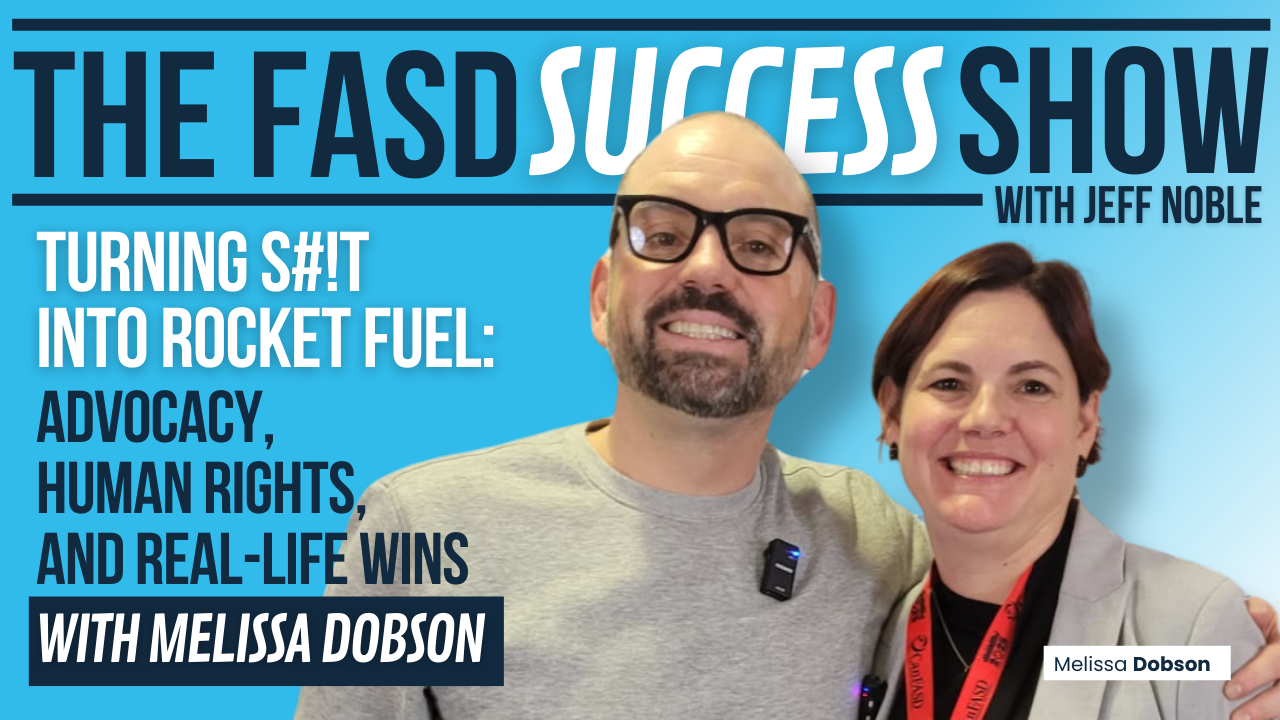
Turning Sh*t Into Rocket Fuel: How Caregivers Can Turn the Hard Stuff Into Growth
What if the things that keep knocking you down — the school meetings, the misunderstandings, the sleepless nights — weren’t signs you’re failing?
What if they were actually the very things building your strength, fueling your advocacy, and shaping how you show up for your family?
In this powerful episode of The FASD Success Show, Jeff Noble sits down with Melissa Dobson, a mom, caregiver, and advocate who’s learned how to take the hardest moments of raising kids with FASD and turn them into rocket fuel.
This episode kicks off the Holiday Sanity Series — a month focused on helping caregivers create calmer, steadier days during a season that often feels like anything but calm and steady.
Because this time of year isn’t always about cozy sweaters and cocoa.
Sometimes it’s about surviving the chaos, resetting expectations, and remembering that regulation — not perfection — is what actually matters.
Meet Melissa Dobson
Melissa Dobson is the Co-Chair of the Family Advisory Committee at CanFASD, a full-time working mom of three teens, and a caregiver raising kids on the spectrum.

She’s been kicked out of principal’s offices, rebuilt routines from scratch, and learned the hard way how to balance life, work, and advocacy in systems that weren’t built for families like hers.
What makes Melissa’s story so powerful is that it’s not polished — it’s practical.
She’s honest about what breaks her, what rebuilds her, and what keeps her going.
In This Episode You’ll Hear
You Don’t Have to Fight Every Battle
The stress of constant advocacy keeps your nervous system in survival mode. When you’re always “on,” your brain releases cortisol and adrenaline, flooding your system like you’re in danger — even when you’re not.
Melissa learned that real advocacy starts with regulation. When your body is calm, your thinking brain — the prefrontal cortex — stays online, which means you communicate, problem-solve, and connect more effectively.
Rebuilding Routines Repairs the Brain
Routines aren’t just about structure — they’re neurological safety nets. For individuals with FASD, predictability helps the brain quiet its internal alarm system and bring the amygdala out of high alert.
Every time you rebuild after chaos, you’re literally helping your loved one’s brain rewire for calm and stability.
Connection is Co-Regulation
We talk about self-regulation, but the truth is, regulation starts with co-regulation. When someone feels safe and seen, their brain releases oxytocin — a chemical that lowers stress hormones and helps them return to balance.
Melissa shares how community, honesty, and even short moments of connection have helped her and her kids reset faster after tough days.
Letting Things Fall Apart is Not Failure
Sometimes the bravest thing you can do is stop holding everything together.
Letting go of old traditions or routines that no longer work isn’t giving up — it’s making room for what your child’s brain actually needs right now. Flexibility is a form of resilience, and it models that adaptability for your kids, too.
Advocacy Works Best When You’re Regulated
When your nervous system is calm, your prefrontal cortex — the part of your brain that handles empathy, language, and planning — is active.
That’s why calm caregivers are often the most effective advocates. They can see solutions instead of threats, ask questions instead of reacting, and keep the focus where it belongs — on their child’s needs, not the chaos around them.
Why It Matters
The holidays bring extra noise, extra expectations, and extra pressure.
But here’s the truth: calm isn’t a luxury. It’s biology.
When you build your days around regulation — your child’s and your own — you’re not doing less. You’re creating the conditions for growth.
Regulated brains learn better, connect better, and recover faster.
Melissa’s story is proof that even when things fall apart, they can be rebuilt stronger.
You can turn frustration into focus.
You can turn chaos into clarity.
And yes — you can turn sh*t into rocket fuel.
Because this season isn’t about perfection. It’s about protection — for your peace, your energy, and your family’s nervous systems.
That’s your one good thing this week.
Watch or Listen to the Full Episode
YouTube: Watch the full episode here
Apple Podcasts: The FASD Success Show
Spotify: Listen on Spotify
Resources and Links
Connect with Melissa Dobson
Co-Chair, Family Advisory Committee — CanFASD.ca
Join our Caregiver Community
Facebook Group: facebook.com/groups/FASDforever
Follow Jeff Noble
Instagram: @FASDSuccess
Facebook: FASD Success
Full Show Notes and More Episodes: fasdsuccess.com/podcast