
Episode 183: New Research on FASD and Aging - What Families Need to Know
Jan 04, 2026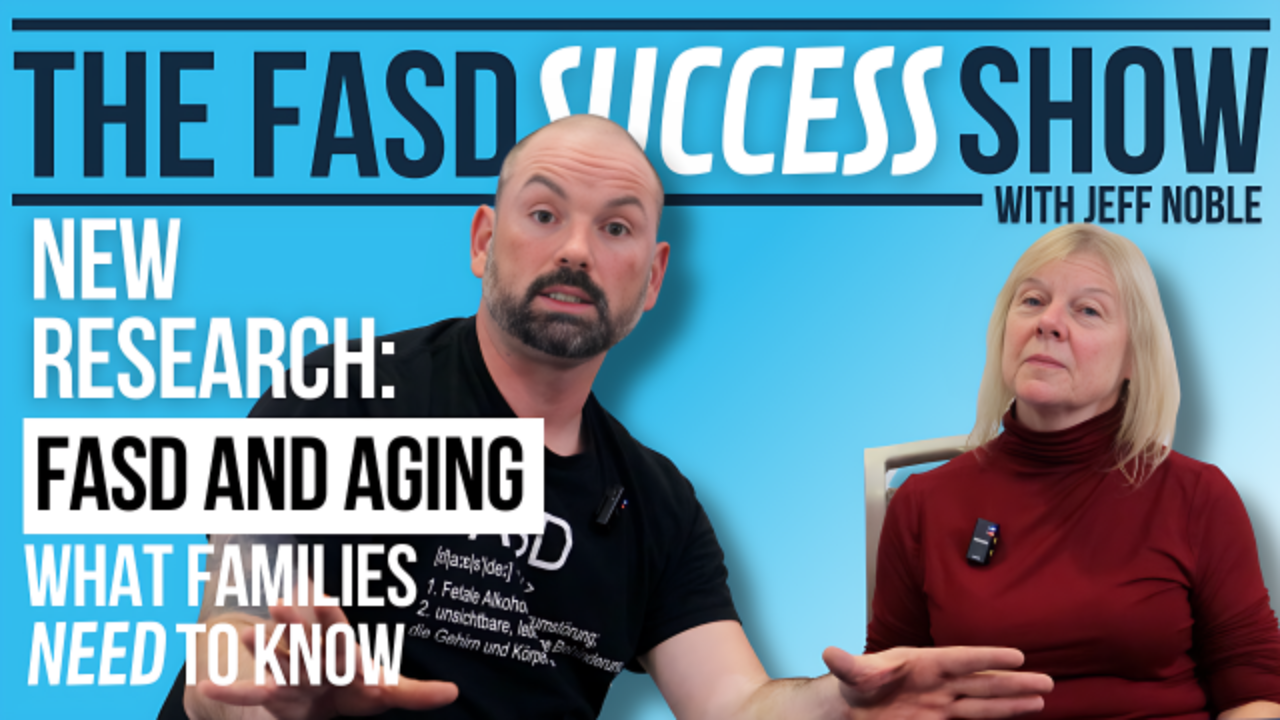
What happens as individuals with FASD grow into adulthood — and beyond?
For decades, research has focused on children and youth. But what about the adults who were never diagnosed as kids? The ones now in their 30s, 40s, and 50s who are finally getting answers?
In this episode of The FASD Success Show, I sit down with Dr. Valerie Temple to talk about brand-new Canadian research that’s changing how we understand FASD across the lifespan.
Her team’s 2025 study — Fetal Alcohol Spectrum Disorder (FASD): Comparing Profiles of Younger versus Older Adults — is one of the first to look at what happens as people with FASD age. The findings are eye-opening, hopeful, and incredibly relevant for caregivers, families, and professionals.
Meet Dr. Valerie Temple
Dr. Temple is a psychologist, researcher, and long-time leader in the FASD field. She’s worked directly with individuals and families for over two decades and currently leads diagnostic and research initiatives that shape FASD policy and practice across Canada.
Her recent paper, published in the Journal of Intellectual & Developmental Disability, compared more than 400 adults with FASD from clinics across the country — making it the largest study of its kind.
What the Study Looked At
Dr. Temple and her team used the Canadian National FASD Database, which includes assessments from 29 diagnostic clinics nationwide.
They compared two groups:
-
Younger adults: ages 18–24
-
Older adults: ages 35–61
The study looked at cognition, memory, attention, executive functioning, physical health, substance use, and daily life skills — to answer one big question:
How does FASD change, or stay the same, across adulthood?
What They Found
1. The FASD Profile Shifts Over Time — But It Doesn’t Disappear.
Younger adults were more likely to have challenges with executive function (planning, organizing, staying on task) and attention.
Older adults, however, showed higher rates of memory problems — even though their average age was only 42.
The total number of affected brain areas didn’t change — meaning the brain is still impacted, but the way it shows up evolves with age.
2. Mental Health and Substance Use Remain High Across Adulthood.
Roughly 65–70% of both age groups reported ongoing mental health conditions. Substance misuse was also common, with no major difference between younger and older adults — although older adults were more likely to be in treatment.
This reinforces a crucial point:
Mental health and addiction services need to stay accessible and adaptable for adults with FASD, not just youth.
3. Daily Living and Independence Improve — But Physical Health Declines.
Older adults were more likely to live independently and rely less on supported housing.
However, they also had significantly higher rates of chronic physical issues — including neurological, respiratory, and endocrine problems.
For caregivers, this means the focus of support should shift over time — from teaching life skills in early adulthood to helping with health management and community access later on.
4. The Brain Keeps Adapting.
This might be the most encouraging part.
Dr. Temple’s team found that executive functioning and attention actually improve for many adults over time.
That doesn’t mean the brain is “healed” — it means that with stability, understanding, and regulation, adults learn new strategies to compensate and adapt.
That’s neuroplasticity in action — the brain’s lifelong ability to grow and change.
What It Means for Caregivers
This study is scientific proof of something you probably already feel: your support makes a measurable difference.
If your loved one with FASD is an adult — or growing into one — you may have wondered:
“Does it ever get easier?”
“Is this just how it’s going to be?”
Dr. Temple’s work gives us an evidence-based answer:
It changes. It evolves. It’s not about “outgrowing” FASD — it’s about growing through it.
That means your role as a caregiver, mentor, or support person remains vital — but it also means hope is justified, not wishful thinking.
Practical Takeaways for Families and Systems
For younger adults (18–24):
-
Focus on executive functioning supports — planning, routines, transitions
-
Build structured independence slowly and predictably
-
Provide mental health and substance use education early
For older adults (35+):
-
Support physical and medical health proactively
-
Monitor memory and daily living skills
-
Create stable, supported community connections
For everyone:
-
Keep mental health support consistent
-
Use a brain-based, not behavior-based, approach
-
Remember: regulation comes before growth
Why This Study Matters
This is one of the first large-scale research projects to show that aging with FASD is not just “more of the same.”
The challenges shift. The supports need to evolve.
It also reinforces that early diagnosis and lifelong understanding matter.
Adults who never had the chance to be identified as children may experience avoidable stress, burnout, or physical decline — not because they failed, but because systems didn’t see them soon enough.
For caregivers and families, this research offers something invaluable:
scientific validation for what you already know — that the brain keeps growing, and support always matters.
Resources and Links
Read the full study:
Fetal alcohol spectrum disorder (FASD): Comparing profiles of younger versus older adults
Watch the full interview:
YouTube: New Research on FASD and Aging — What Families Need to Know
Listen to the episode:
Apple Podcasts: The FASD Success Show
Spotify: Listen on Spotify
Join our free caregiver community:
facebook.com/groups/FASDFOREVER
Learn more and explore all episodes:
fasdsuccess.com/blog/new-research-on-fasd-and-aging-what-families-need-to-know